

Invest Smart & Add Real Value to your Home in 2026
The kitchen is often called the heart of the home – it’s where daily life happens, memories are made, and families come together. When it’s time to sell, it’s also where buyers naturally focus a lot of their attention. Kitchen renovations remain one of the most powerful ways to increase the value of a home. But the biggest return doesn’t always come from the biggest budget. The homeowners who see the strongest results are the ones who renovate strategically, align their spending with their neighbourhood, and focus on function first.

This guide breaks down everything you need to know about kitchen renovation ROI in clear, practical terms, with Ontario-focused numbers so you can plan with confidence.
What “Return On Investment” Really Means For Your Kitchen
When we talk about kitchen renovation ROI, we are asking one key question:
For every dollar you spend, how much value does your home gain when you sell?

If you spend $30,000 on a kitchen and your resale value increases by $21,000, your ROI is 70%. You have also likely improved your chances of selling faster and receiving stronger offers, which is harder to measure but very real in competitive markets like Simcoe County.
Factors to Consider When Approaching a Kitchen Renovation
KNow your budget
Smart budgeting is key when starting any sort of renovation project. One of the most common mistakes is starting without a clear plan or assuming that spending more automatically means a better ROI. Going into your project with defined goals, a realistic budget, and a solid understanding of cost ranges will help you make better choices. For 2025–2026, typical Ontario kitchen renovation ranges look like this:
- Cosmetic / Minor Refresh:
Approx. $12,000 – $30,000 - Mid-Range Renovation:
Approx. $30,000 – $60,000 - Full Gut / High-End Remodel:
Approx. $60,000 – $100,000 - Luxury Upgrades:
Approx. $100,000+
Indexes from Stats Canada show steady cost inflation for kitchen-related trades and materials, which has pushed renovation prices higher in recent years. That makes careful planning and spending your budget wisely more important than ever.
ROI By Project Type
Expected ROI can be broken down by the level of renovation completed:
| Renovation Type | Average Investment | Average ROI |
| Minor Refresh | $12,000 – $30,000 | 75% – 100% |
| Mid-Range Renovation | $30,000 – $60,000 | 60% – 80% |
| Full Gut/ High-End Remodel | $60,000 – $100,000 | 40% – 70% |
| Luxury Upgrades | $100,000+ | < 40% |
In most cases, minor and mid-range projects clearly offer the strongest balance of cost and return. But what does this actually look like?
1. Minor Kitchen Refresh
Estimated ROI: 75 – 100%
Typical spend: $12,000 – $30,000
Example return: If you spend $20,000 with an 85% ROI, you would see $17,000 in recovered value
Often includes:
- Painting or refacing cabinets in modern, neutral tones
- Refreshed countertops on existing layout
- Updated hardware & fixtures
- New backsplash
- Basic appliance upgrades
- Fresh lighting & a coat of paint
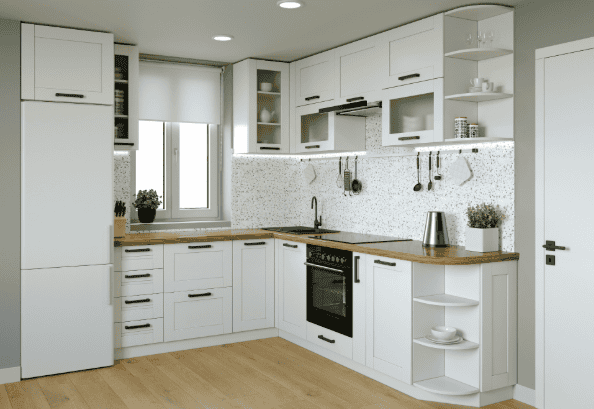
This type of renovation works so well because it focuses on what buyers actually notice first, with minimal disruption, cost, and downtime required. When done properly, these minor updates can create a dramatic visual impact without a full demolition. They also keep the space broadly appealing to a wide range of buyers.
2. Mid-Range Kitchen Remodel
Estimated ROI: 60 – 80%
Typical spend: $30,000 – $60,000
Example return: If you spend $45,000 with a 70% ROI, you would see $31,500 in recovered value
Often includes:
- New cabinetry (stock or semi-custom)
- Quality quartz or stone countertops
- New appliance package
- Updated flooring
- Better lighting & improved layout where possible

This level is ideal when the existing kitchen feels very dated or poorly laid out. In many Simcoe County and GTA homes, this is the “sweet spot” where you modernize the space enough to stay competitive without drifting into luxury over-spend.
3. Full Gut / High-End Remodel
Estimated ROI: 40 – 70%
Typical spend: $60,000 – $100,000
Example return: If you spend $80,000 with a 55% ROI, you would see $44,000 in recovered value
Often includes:
- Custom cabinetry
- Premium stone or specialty surfaces
- Top-tier appliance brands
- Structural changes, wall removal, or full reconfiguration
- Built-in features, panel-ready appliances, & designer details
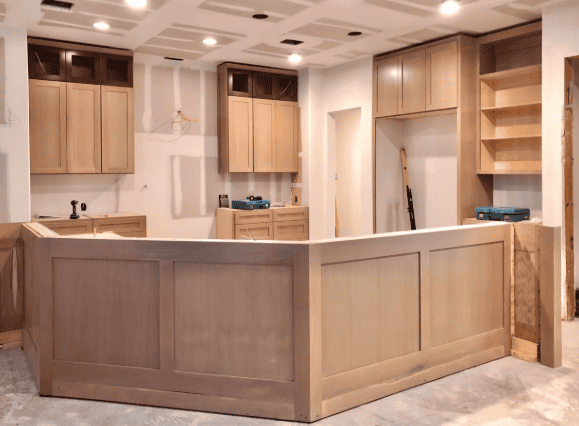
You often get lower percentage returns but higher dollar gains in this range, particularly in higher-priced neighbourhoods where buyers expect a showpiece kitchen.
4. Luxury Upgrades
Estimated ROI: often under 40%
Typical spend: $100,000+
Example return: If you spend $110,000 with a 20% ROI, you would see $22,000 in recovered value
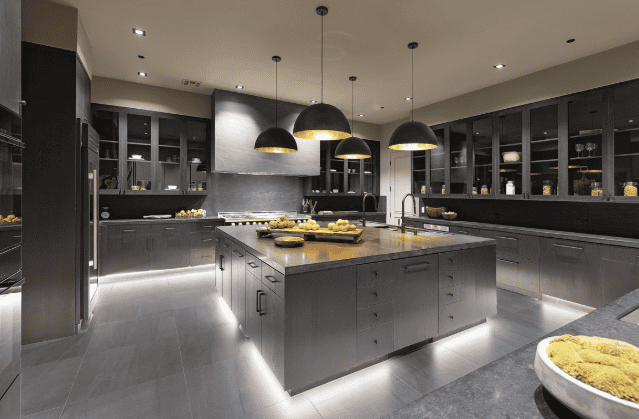
At this level think fully custom, chef-level spaces with every feature imaginable. These can be beautiful, but they are usually personal enjoyment projects, not ROI plays, unless you are in a true luxury pocket where homes regularly sell well into seven figures. Which brings us to the neighbourhood factor.
The Neighbourhood Factor: Why Location Changes ROI
ROI is not one-size-fits-all. A smart kitchen renovation in one neighbourhood can be an over-improvement in another. Diminishing returns start to show quickly once you go beyond what local homes typically support. It’s important to understand how homes in your specific area are priced and what buyers expect before you set your kitchen renovation budget.
Higher-ROI areas often have:
- Active resale markets with steady turnover & consistent buyer demand
- A mix of original & renovated homes (so buyers understand the value of upgrades)
- Higher home prices that can support the cost of higher-end or luxury renovations
Lower-ROI areas often include:
- Neighbourhoods already at a price ceiling
- Areas with declining demand
- Markets where most homes are already updated
- Markets where buyer budgets do not support higher-end finishes

A helpful rule of thumb:
Match your renovation scope to neighbourhood standards. A $75,000 kitchen upgrade in a neighbourhood where most homes sell for $500,000 – $600,000 is likely an over-improvement that would generate a lower ROI. The same renovation in a $1M+ neighbourhood could make sense.
Before you start, compare recent sales of homes with dated kitchens vs renovated kitchens in your exact area. The difference in sale price helps define your ideal renovation “ceiling”.
Timeline: How Long You Plan To Stay Changes Your Strategy
Your ownership timeline should drive your renovation choices as much as your budget and location.
Selling Within 1–2 Years
Focus on high-ROI projects:
- Minor kitchen refresh (painted cabinets, new counters, updated fixtures)
- Fresh interior paint in light, neutral colours
- Flooring upgrades in high-traffic areas
- Small but impactful updates (hardware, lighting, backsplash)
- Essential repairs & maintenance
Avoid heavy structural changes or ultra-personal designs. There is not enough time to recover those costs.
Planning To Stay 3–5 Years
You can consider medium-ROI projects that boost both your daily life and resale value:
- More substantial kitchen renovation if the current space is very dated
- Better-quality appliances & surfaces that wear well
- Larger energy efficiency upgrades, including windows & insulation
- Added storage solutions & smart layout changes
You will enjoy the improvements now and still recapture a healthy portion of the cost later.
Long-Term (7+ Years)
Here, the focus shifts from pure ROI to quality of life:
- Design the kitchen you want to cook & gather in every day
- Consider layout changes that improve function long term
- Choose finishes you love, even if they are less “universal”
The eventual resale value is still important, but daily enjoyment has much more weight in the decision.

Where Your Money Actually Goes
Once you have a clear plan for your overall budget, it is just as important to think about how that budget will be divided. A solid breakdown helps you see where your money will work hardest, and where you may want to scale back.
For a typical mid-range kitchen renovation, your budget is often divided roughly like this:
| Category | % of Budget |
| Cabinetry | 30-35% |
| Labour | 30-40% |
| Appliances | 10-20% |
| Countertops & Backsplash | 10-15% |
| Flooring | 7-10% |
| Plumbing & Electrical | 5-10% |
| Paint & Hardware | 5-10% |
| Lighting, Faucets, & Sink | 3-5% |
As you can see, decisions around big-ticket items like cabinetry and labour costs carry much more weight than aspects such as hardware or lighting. Even small changes to those major categories can significantly shift your overall budget.

High-ROI Kitchen Elements To Prioritize
Now that you have your detailed budget, timeline, and project type in place, it is worth looking at the upgrades that deliver the strongest impact for the money. In Ontario, certain improvements reliably stand out to buyers. Prioritizing these can be especially smart when you are working within a tighter budget.
1. Paint
- One of the best ROI projects across Canadian markets
- Neutral, light tones make rooms feel larger, cleaner, & brighter
- A professional paint job can dramatically transform listing photos & in-person first impressions
- Low financial investment & minimal physical effort required
Fresh paint can deliver around 60% ROI or more, while also making every other update look better.
2. Countertops
- Quartz & granite remain top choices for both look & durability
- Replacing dated laminate with stone is often a 60–80% ROI move
- Waterfall edges, clean profiles, & light tones photograph extremely well
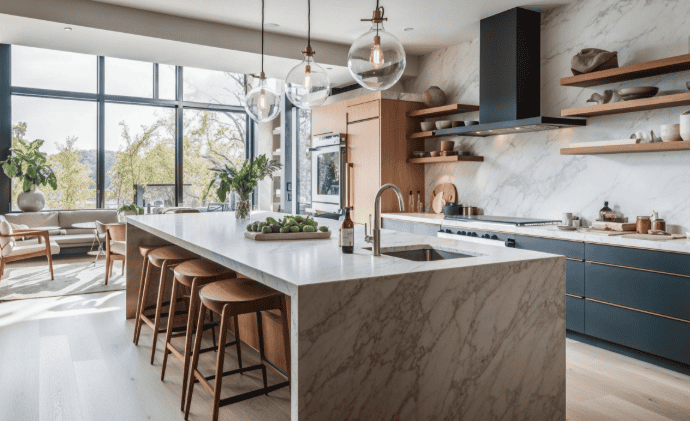
If your overall layout works well but your counters are dated, this is often a priority upgrade.
3. Flooring
- Worn flooring is one of the fastest ways to make a kitchen feel tired
- Quality installation matters as much as the product you choose
- Wood & good-quality laminate or vinyl can often return 100%+ of their cost
Avoid cheap, trendy options that will date quickly. Aim for durable, neutral, and cohesive with the rest of the main floor.
4. Lighting
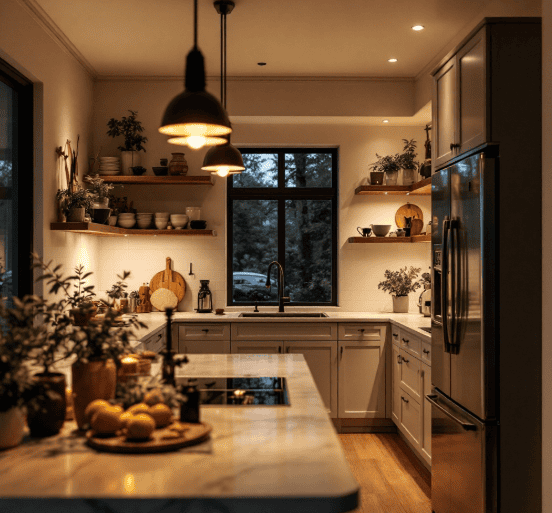
A well-lit kitchen feels larger, cleaner, and more expensive.
- Layer overhead lighting, island pendants, & under-cabinet lights
- Use warm, consistent colour temperatures
- Better lighting is relatively low-cost & high-impact for ROI
5. Appliances
- Stainless steel remains the most requested finish for many Ontario buyers
- Energy-efficient models lower monthly bills & appeal to cost-conscious households
- Basic smart features (Wi-Fi, better controls) are a plus, especially for younger buyers
You do not always need top luxury brands. A good mid-range package with clean lines and consistent finishes is often enough.
6. Cabinetry
Cabinetry can truly make or break a kitchen. Even the most beautiful finishes will fall flat if the space does not function well, making smart storage solutions and thoughtful cabinetry choices crucial.
- Reface or refinish existing cabinets that are still in good condition instead of fully replacing them
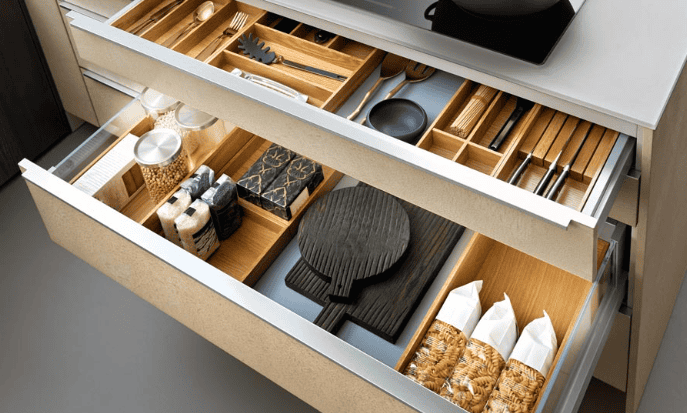
- Prioritize function – think pull-outs, built-ins, corner carousels, & drawer organizers that make everyday life easier
- Stock or semi-custom cabinets keep costs in check while still delivering a beautiful, high-quality look
What Hurts Kitchen Renovation ROI?
Just as some choices help, others quietly drag ROI down:
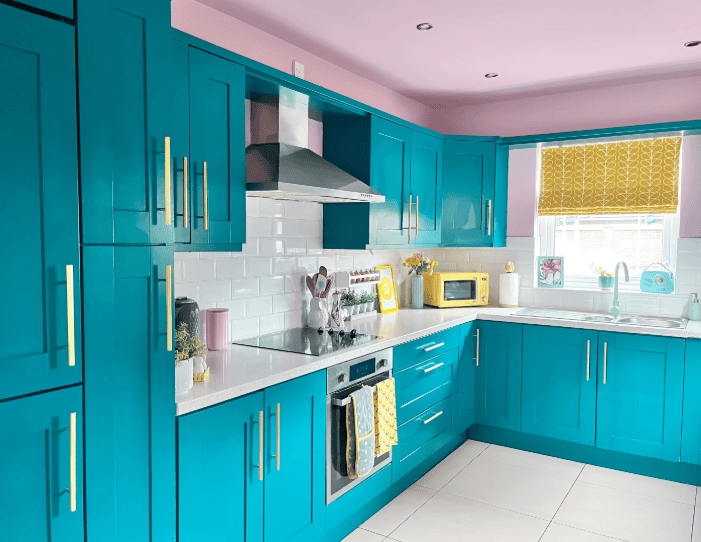
- Over-personalized designs that only suit a narrow taste
- Skimping on ventilation or skipping a proper range hood
- Poor workmanship, visible flaws, or “quick fix” DIY shortcuts
- Overbuilding for the neighbourhood price point
- Overly complicated smart systems that feel fussy rather than helpful
- Cheap, trendy finishes that will look dated in a few years
Remember: If your budget is tight, focus on layout, light, durability, and clean finishes over flash.
Final Smart Renovation Strategies
To keep your project on track and protect your ROI:
- Set a contingency fund of at least 10–15% for surprises
- Mix high & low: splurge on counters or cabinets, save on hardware or shelving
- Get at least three detailed quotes from reputable contractors
- Plan for delays in materials & labour
- Prioritize needs before wants: function, safety, & storage first, luxury extras later
- Rebate opportunity: Ontario’s HRSP program offers rebates of up to 30% on energy-efficient home upgrades
Pulling It All Together
A kitchen renovation is ultimately both a lifestyle decision and a financial one. The best ROI usually comes from minor and mid-range projects that make your kitchen brighter, more functional, and more timeless rather than ultra-custom.
If you are planning to sell soon, focus on cosmetic refreshes and smart upgrades that help your home show better, photograph better, and compete strongly with other listings. If you are staying longer, the focus can shift to creating a kitchen that truly fits your lifestyle.
Either way, think like a buyer, pay attention to your neighbourhood, invest in quality workmanship, and let your kitchen become a space that adds real value to both your daily life and your bottom line.
Peggy’s Tip: Don’t forget to balance ROI goals with personal enjoyment and comfort in your home. Kitchens are meant to be lived in and enjoyed, so if there is something that you really want that might not fully align with ROI recommendations, go for it! There is immeasurable value in loving your home and feeling like your space truly speaks to you.